
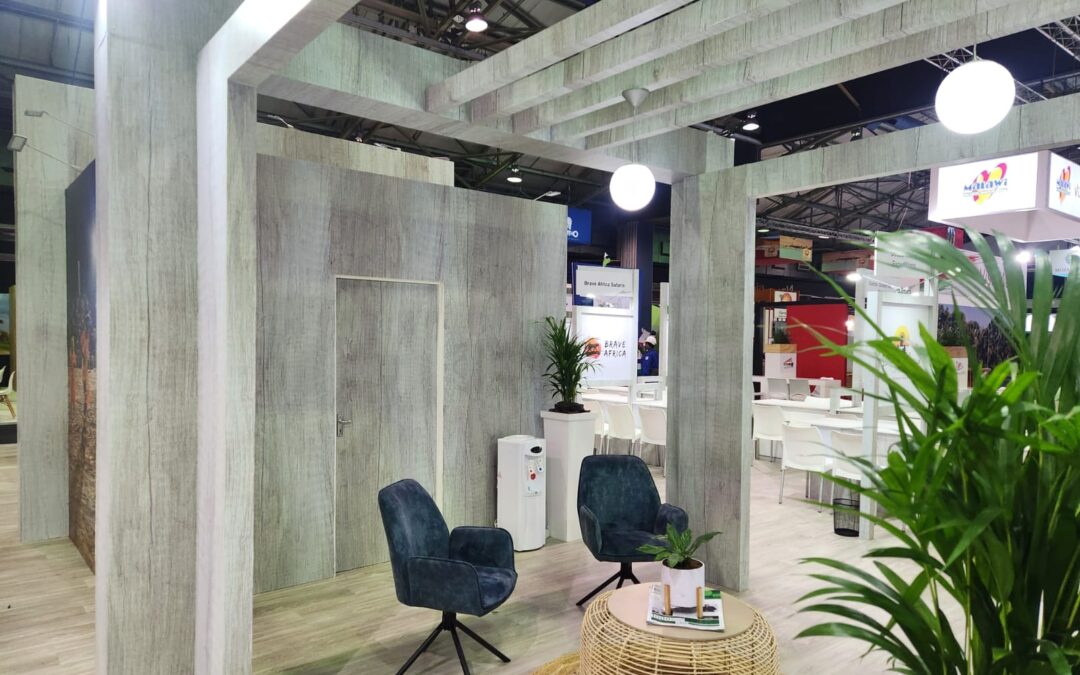
The most effective expo stall design gives people a reason to stop, a clear understanding of your offer, and an easy way to engage. ExpoGuys believes creativity earns its place when it supports those three jobs, helping South African exhibitors turn a striking presence into meaningful business conversations.
Picture a visitor walking through a busy exhibition hall. They’re scanning signs, checking where they need to go, and deciding which stands deserve a closer look. Your team may be ready with an excellent presentation, but the first conversation starts before anyone speaks.
Your stand’s layout, message, and focal point are already telling that visitor whether your business is relevant and whether approaching you will feel easy.
That’s the real opportunity in exhibition design. A memorable feature can attract attention, while a thoughtful space helps people act on their interest. The two need to work together.
Why Attention Is Only the Beginning
A stand can be highly visible and still leave visitors unsure about what’s on offer. An oversized logo establishes identity, but it doesn’t necessarily explain the problem your business solves. A busy demonstration attracts a crowd, but that crowd can block the entrance for other potential customers.
The useful question is what happens after someone notices you.
Consider an illustrative example: an equipment supplier fills its stand with products, technical specifications, and a large reception desk. There’s plenty to see, yet a visitor can’t easily identify the flagship product or find space to ask a question.
A more focused concept could put one relevant application at the centre, show the product solving that problem, and leave a clear route to a team member. The remaining range could sit in supporting displays or a catalogue.
Both approaches showcase the business. The second gives the visitor a clearer starting point.
For South African exhibitors balancing stand space, staff time, travel, and production costs, that clarity deserves as much attention as the visual finish.
Start Your Expo Stall Design with the Conversation You Want
Before choosing colours, furniture, or screen sizes, decide what a successful visitor interaction should look like.
Are you introducing a new product? Arranging distributor meetings? Demonstrating a technical process? Building recognition for a service that needs some explanation?
Each objective suggests a different use of space.
|
Exhibition objective |
Design priority |
Useful visitor action |
|
Launch a product |
A clear focal display with room to view it |
Watch a demonstration or ask for details |
|
Generate business enquiries |
An accessible introduction area and space to talk |
Discuss a need and agree on follow-up |
|
Meet distributors or partners |
A recognisable frontage and suitable meeting area |
Hold a planned conversation |
|
Explain a complex service |
Simple graphics and a focused explanation point |
Understand the process and ask a relevant question |
|
Introduce a broader range |
An organised display with clear product groupings |
Find the category that matches a requirement |
Choose one primary objective, then identify the secondary activities the stand must accommodate. Trying to give every activity equal prominence can make a limited footprint difficult to navigate.
Six Creative Ways to Make Your Stand More Engaging
1. Build the design around one recognisable feature
A distinctive shape, a carefully framed product, or a strong graphic treatment can give your stand an immediate identity.
The feature should connect to what your business does. For example, an illustrative packaging concept might use an enlarged outline of its signature container to frame the product display. A service business could make a clear process graphic the centre of its design.
Give that feature enough visual breathing room. If every surface competes for attention, the main idea becomes harder to recognise.
Our branding capabilities include CNC designs, fabric banners, graphics production, and vinyl prints. These offer different ways to express a concept, from shaped details to large visual surfaces. The right choice depends on the message, viewing distance, available space, and overall construction.
2. Let the headline explain why someone should stop
Visitors shouldn’t need to read a company profile to understand your relevance.
Build a simple information hierarchy: identify the brand, state the main offer or benefit, and provide supporting detail where people can examine it more closely.
For a hypothetical industrial exhibitor, a headline such as “Find the right pump for your process” gives a visitor a clearer reason to approach than a broad claim about excellence. Any performance promise should, of course, be something the business can substantiate.
Position the key message where people can read it without staff, furniture, or products obscuring it. Review artwork at its intended scale; something that looks clear on a laptop may be difficult to read across an aisle.
3. Give demonstrations their own space
A useful demonstration answers a customer’s question. It might show how a component fits, how a material behaves, or how a service works from enquiry to delivery.
Plan where the demonstrator stands, where visitors gather, and how other people continue moving through the stand. Include space for samples, equipment, and the items needed between demonstrations.
If you’re using video, make the central idea understandable without relying entirely on sound. Captions and clear visual sequences can help visitors follow the explanation in a busy hall.
Technology works best when it shortens the distance between curiosity and understanding. A screen needs a defined job, just as a physical product display does.
4. Make the entrance feel welcoming
Look at your layout from the aisle. Is the way in obvious? Can someone pause without standing in the path of other visitors? Does the first interaction require them to approach a wall of staff behind a desk?
A reception counter can be useful, but its position matters. Moving it away from the centre of the frontage may create a more natural opening, depending on the footprint and the sides available for access.
Keep furniture proportionate to the space. Plan clear movement routes, consider visitors with different mobility needs, and resolve changes in floor level early with the design team and organiser.
Sometimes the most valuable creative decision is leaving part of the floor empty. That space gives people somewhere to enter, look, and decide what interests them.
5. Use light to establish a focal point
Lighting should help visitors see what matters: a product’s detail, the main message, or the place where a demonstration happens.
Think about glare on screens, reflections on glossy graphics, and shadows across products. An illuminated feature may look attractive in a visual concept but needs to remain comfortable and legible in the actual exhibition environment.
Our electrical and audio-visual offering includes electrical reticulation, lighting, and neon flex signage. Discuss these requirements alongside the layout so that power access and cable routes support the design from the beginning.
6. Create space for a conversation to develop
A quick introduction and a detailed business discussion need different conditions.
Where the footprint allows, separate the initial engagement area from a quieter place to sit or review information. This doesn’t have to mean a fully enclosed meeting room. Furniture placement can create a useful distinction while keeping the stand open.
We offer furniture, upholstery, plant displays, flooring, and special features such as lounges and reception areas. Select these elements for how people will use them. A meeting table needs room for the conversation and for chairs to move without blocking circulation.
A Small Stand Can Still Have a Strong Identity
Limited floor space rewards clear choices. It becomes difficult to communicate when a compact stand is expected to hold the entire product range, several staff members, a meeting area, and bulky promotional stock.
Start with the essential interaction and build around it. A smaller stand might need one main graphic, one focused display, a compact discussion point, and discreet storage.
Our exhibition offering includes customised designs, shell schemes, pavilions, and walk-on packages. Discuss the format alongside your objectives and budget, and confirm what’s included in the proposed solution.
For a shell scheme space, coordinated graphics and carefully selected furnishings can create a coherent identity. Check usable panel dimensions, permitted fixing methods, and organiser requirements before producing artwork or specifying additions.
Custom design offers opportunities to shape the environment around a particular concept. Its value depends on how well those choices serve the brief, rather than how many features fit into the space.
Plan for the South African Event You’re Actually Attending
An expo stall designshould respond to its audience and venue. A consumer exhibition in Cape Town may call for a different interaction from a specialist business event in Johannesburg, even when the same brand is exhibiting.
Think about what visitors already know, what they need to understand, and how much time they’re likely to spend with you. Use plain language, explain specialist terms where necessary, and consider additional language support when it would help the intended audience.
Practical details belong in the early brief, too. Confirm the stand’s position, open sides, neighbouring spaces, available services, and build-up arrangements. Ask the organiser about applicable height limits, approvals, access requirements, and electrical arrangements for that particular event.
If a demonstration depends on connectivity, establish what’s available and prepare an appropriate fallback, such as an offline presentation. If your product is large or heavy, discuss delivery, positioning, and venue requirements before the design is finalised.
These decisions protect the creative idea by making sure it can work in the space you’ve booked.
Think Beyond a Single Exhibition
If your business exhibits regularly, bring the wider programme into the design discussion.
Which messages will remain relevant? Which graphics are tied to a short campaign? Could appropriate components be used again, and would they suit the different footprints you expect to book?
Separating enduring brand elements from changing campaign content can make future updates easier. However, reuse needs planning: dismantling, transport, storage, condition checks, and adaptation all affect whether an element remains practical for another event.
We also offer sustainable stands. Discuss the specific materials, components, and reuse options proposed for your project so you can make informed decisions about its next use.
Avoid judging sustainability by appearance alone. A natural-looking finish doesn’t explain how something was made or what happens to it afterwards. Ask concrete questions about the proposed design and its likely life beyond the show.
Budget for the Complete Visitor Experience
When reviewing a quotation, consider the full working stand: structure, graphics, flooring, furniture, lighting, technical requirements, and the agreed services needed to deliver it.
Clarify inclusions and exclusions, along with any separate organiser or venue charges. A realistic budget should also account for your own exhibition activity, including staffing, travel, demonstration materials, and follow-up.
If you need to simplify, protect the elements that help people understand and engage: a clear message, a usable layout, a well-presented offer, and enough space for the team to work.
Our in-house manufacturing capability and project management services connect the creative brief with practical delivery. Share your priorities early so that design decisions can reflect the scope you actually need.
Measure What Happens After People Stop
Agree on success measures before the exhibition opens. For many exhibitors, useful indicators include relevant enquiries, completed demonstrations, booked meetings, and agreed next steps.
Brief your team on how to record the need behind an enquiry. A contact detail alone tells you less than a note explaining the visitor’s application, purchasing timeframe, and requested follow-up.
During the event, observe how the stand works. Are people missing the main message? Does a display obstruct the entrance? Are the same questions coming up because information is difficult to find?
Some issues may be resolved with small changes to presentation or staff positioning, where permitted. Others become valuable input for your next brief. Good exhibition planning gives each event a chance to inform the next one.
FAQs About Expo Stall Design
What is expo stall design?
Expo stall design is the planning of an exhibition space’s appearance and function. It brings together layout, branding, displays, lighting, furniture, and visitor movement to help a business communicate its offer and engage its audience.
What makes an expo stall attract attention?
A recognisable focal point, a clear message, and a consistent visual identity can help a stand get noticed. The layout should then make it easy for interested visitors to approach, explore, and speak to the team.
Can a small exhibition stall look professional?
Yes. Focused graphics, suitable furniture, an uncluttered display, and clear access can make a compact space feel considered. Prioritise the products and conversations that matter most rather than trying to display everything.
Does ExpoGuys offer branding for exhibition stands?
Yes. Our branding services include CNC designs, fabric banners, graphics production, and vinyl prints. We can discuss suitable options for your stand’s message and visual concept.
How much does expo stall design cost?
Costs depend on the footprint, design complexity, materials, graphics, technical needs, and project scope. Request an itemised quotation against a clear brief and check which services and event-related charges are included.
How early should we begin planning?
Start once your event, objectives, and intended space are known. The required lead time depends on the design, production scope, and organiser deadlines. Confirm a schedule that allows for approvals, artwork, production, and delivery rather than assuming a standard turnaround.
What should we include in a design brief?
Provide the event and venue, dates, stand dimensions, open sides, budget, brand guidelines, main objective, target audience, and products or services to showcase. Include staffing, meeting, storage, demonstration, and technical needs, together with the organiser’s exhibitor manual.
Let’s Create an Expo Stall That Gives People a Reason to Stop
Your next exhibition is an opportunity to make your business easier to notice, understand, and approach. Let’s build the design around the conversations you want to have.
Send us your event details, stand dimensions, budget, and objectives. We’ll discuss how to bring your message and space together in an expo stall design suited to your brief.
Contact ExpoGuys to discuss your next exhibition stand and follow us on Instagram to view our recent projects