
Working in Africa
2016 has really been an eventful year in Africa for ExpoGuys; we covered some interesting ground. We started by pushing the limits in Kenya in October 2015.
Facts:
Expoguys – Nairobi Kenya 2015: 13 individual exhibitors,a large information stand, no adequate lead time to send by sea, forced to fly 14 tonnes of goods to Kenya, deal with all aspects surrounding temporary import permits, 24 hour limited build up time(this would be 24 continuous hours),and breakdown and removal immediate to make way for visit by The Pope. Prior to this very rushed job for a major
European government organisation, we repeatedly traveled to Zimbabwe, Botswana,and Mozambique to build many pavilions with numerous individual stands.
March 2016:
Expoguys moved 30 tonnes of exhibition equipment to Bulawayo, Zimbabwe. We built a pavilion housing 25 individual stands, and won the prize on behalf of the client for best International Pavilion on show.
June 2016:
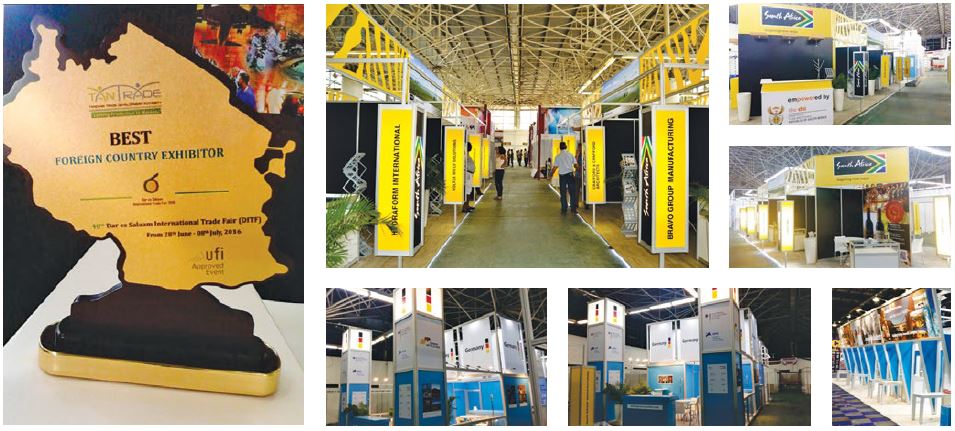
We were awarded a European government pavilion to be built in Tanzania alongside an award for a local South African pavilion; by chance both pavilions were across the passage in the same hall and 28 tonnes of equipment was sent. Both stands with 30 exhibitors were built successfully, with the first place award to our South African pavilion, and second place to our European pavilion, both in category of best stands on show. Round trip from departure of goods to return: 4 months.
July 2016:
Expoguys were awarded a pavilion in Ghana for our European client, 10 days later 15 tonnes of equipment with all graphics left our factory for sea transport to Accra. Build up: early September. Africa is really not for the faint-hearted: changes in shipping times, packing of containers, sailing times and durations, entry permits to these countries, Temporary Import Permits (TIP), correct submissions by the shippers and their agents, customs processes, slow reaction times all create sleepless nights. Not until the project is delivered is the full scope of the job understood, unfortunately these are moving targets from beginning to end.
Why do we venture into Africa?
To work in the unknown, to be successful out of one’s comfort zone is most rewarding. To form partnerships and make new acquaintances in all these countries brings a sense of satisfaction that is unique to this type of work, and to represent South Africa and show our exhibition skill to the rest of the continent is satisfying for our entire crew.